-
Talk to Our Care Planner
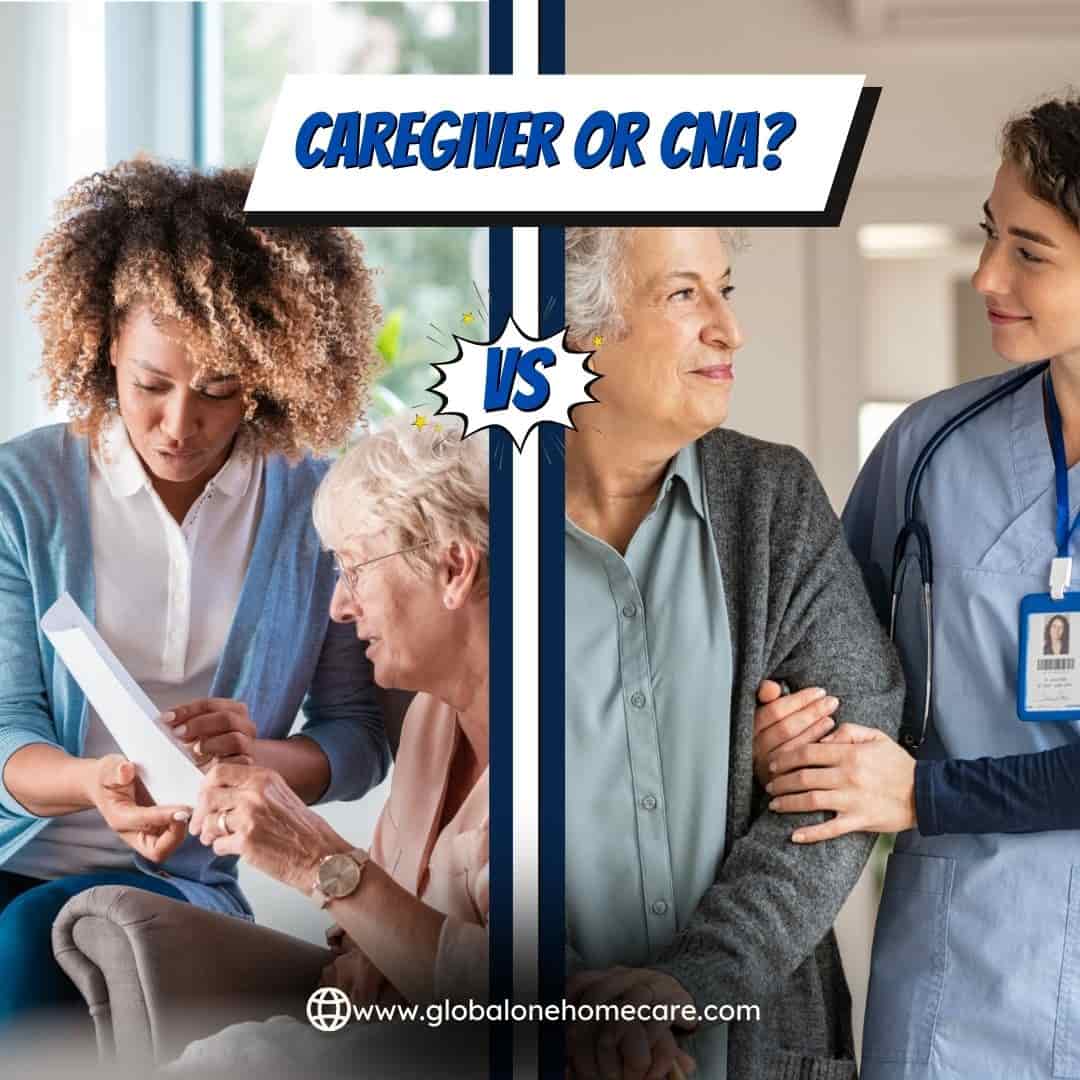
Caregiver Vs CNA: Making the Right Choice for Your Loved Ones
Nearly 70% of Americans over the age of 65 will need some type of long-term care. Whether it’s due to aging, illness, or disability, it’s a reality that many families face.
So, when your loved one needs care, who do you call: a caregiver or a CNA?
Is a caregiver the same as a CNA? What’s the difference between a caregiver vs a CNA?
Caregivers and CNAs (Certified Nursing Assistants) serve different roles. A caregiver focuses on personal care and companionship, while a CNA provides more medically oriented assistance.
This post breaks it down for you, step by step, to give you a clear understanding of which care option is best for your family’s unique situation.
Key Takeaways
- Caregivers provide personal care and companionship, perfect for those who need help with daily activities and social interaction.
- CNAs offer medical support, including taking vital signs and assisting with medical procedures, ideal for those with more complex health needs.
- Caregivers typically have less formal training compared to CNAs but excel in offering emotional support and maintaining a comfortable living environment.
- CNAs are certified and trained to handle medical tasks, making them suitable for patients requiring regular health monitoring.
- Costs and coverage vary: Caregivers might be less expensive, but CNAs may have services covered by insurance or Medicare.
What’s the difference between a caregiver and a CNA?
Before we compare costs and duties, let’s clearly define each role.
Who’s a Caregiver?
A caregiver is a dedicated professional who assists individuals with daily activities, ensuring they live comfortably and safely.
They help with tasks such as bathing, dressing, meal preparation, and light housekeeping. Caregivers also provide companionship, offering emotional support and social interaction, which is vital for the mental well-being of elderly individuals.
But is caregiver a nurse? No. Caregivers do not have medical training like nurses or CNAs. Their focus is on improving quality of life through personal care and support.
Our caregivers at Global One Home Care Agency are trained to handle a variety of non-medical tasks, ensuring your loved one feels cared for and valued.
The most common caregivers are: professional caregivers and family caregivers (family members who care for a loved one at home).
You can learn more about the various types of caregivers here.
Who’s a CNA?

Certified Nursing Assistants (CNAs) are healthcare professionals who assist with medical care under the supervision of registered nurses (RNs) or licensed practical nurses (LPNs).
CNAs are trained to perform clinical tasks such as taking vital signs, assisting with medical procedures, and providing basic medical care. Their role is crucial in settings where patients need ongoing medical attention.
For example, a CNA might support your parent’s health with physical therapy exercises, monitor his blood pressure, or ensure he takes his medication on time.
They’re the go-to professionals for more medically intensive care, providing both the technical skills and the compassionate care needed in various healthcare settings.
Caregiver vs CNA: What is the difference between nursing assistant and caregiver?
When it comes to daily responsibilities, what’s the difference between CNA and caregiver? The main distinctions lie in their duties and the level of training they receive.
| Category | Caregiver Duties | CNA Duties |
|---|---|---|
| Personal Hygiene | Assisting with bathing, grooming, and dressing | Assisting with bathing and dressing, including medical needs |
| Meal Preparation | Cooking nutritious meals and ensuring dietary needs are met | Not typically responsible for meal prep |
| Housekeeping | Light cleaning, laundry, and organizing the home | Not responsible for housekeeping |
| Companionship | Engaging in conversations, accompanying to social activities | Limited due to focus on medical tasks |
| Medication | Reminders to take medications (not administering them) | Administering medications, monitoring side effects |
| Vital Signs | Not typically responsible | Measuring and recording blood pressure, pulse, temperature, etc. |
| Medical Procedures | Not responsible | Assisting with wound care, catheter changes, and other procedures |
| Patient Monitoring | Observing general well-being | Observing and reporting changes in medical condition |
| Mobility Assistance | Helping with general mobility | Assisting with physical therapy exercises and movement. They help patients move around, whether it’s getting out of bed, moving to a wheelchair, or doing leg exercises. |
| Basic Medical Care | Basic first aid and emergency response | Performing CPR, first aid, and other healthcare services |
Caregiver vs CNA Pay: What’s the Difference?

The costs of home care can vary quite a bit. One of the biggest factors families like yours consider is cost. Caregiver vs CNA pay can vary based on experience, location, and the level of medical care required.
- Caregivers: Typically earn between $15 to $25 per hour, depending on location and experience.
- CNAs: Due to their medical training, CNAs generally earn more—$20 to $30 per hour.
- Insurance Coverage: Some CNA services may be covered by Medicare or Medicaid, whereas caregivers are often paid out-of-pocket unless covered under long-term care insurance.
While CNAs have higher pay due to their certification and medical skills, caregivers offer cost-effective solutions for non-medical support.
2. Training and Certification
Training is another important point of difference between caregivers and CNAs.

-
Caregiver Training
Caregivers go through some pretty important training, though it’s less formal than what CNAs get. They learn how to help people with daily tasks like bathing, dressing, and eating.
They also get trained in basic first aid and CPR, which is super important in emergencies.
Plus, they learn how to cook nutritious meals and keep the home safe, like making sure there are no tripping hazards. It’s all about making life easier and safer for the person they’re caring for.
I know that sounds pretty thorough. But are there any certification involved?
Usually, caregivers don’t need a formal certification, but some take extra courses to improve their skills. At our agency, we make sure our caregivers go through a rigorous training program to ensure they’re ready for anything.
-
CNA Certification
As far as training goes…
CNAs have a more structured path. They have to complete a state-approved program that includes classroom lessons and hands-on training.
They learn all about nursing skills, like taking vital signs, helping with medical procedures, and understanding how the body works. After that, they have to pass a state exam to get certified.
This includes a written test and a practical skills test. And they have to keep learning even after they get certified to stay up-to-date.
Why’s all that training necessary for a care professional, you ask?
CNAs handle more medical tasks than caregivers, so they need that extra training to ensure they’re providing safe and effective care.
For instance, one of our CNAs, helped a patient recover from surgery by carefully monitoring his vital signs and making sure he did his physical therapy bed exercises correctly. That kind of expertise is crucial in a clinical setting.
3. Work Environments
A little understanding of the work environments of each care option can really help you make a decision, so you don’t hire someone for one thing and they offer you something else.

-
Caregiver Settings
Where do caregivers typically work?
Caregivers usually work in private homes, which allows them to give personalized care. They can also be found in assisted living facilities and community centers. In private homes, they help with daily routines and offer companionship.
For example, one of our caregivers, Sarah, created a safe and nurturing space for a client at home, which really helped the client feel independent and comfortable.
They’re pretty versatile. Caregivers adapt to different environments and needs, making sure each client feels supported and cared for.
-
CNA Settings
What about CNAs? Where do they work?
CNAs typically work in hospitals, nursing homes, long-term care facilities, and clinics. Their medical training is really valuable in these settings. They assist nurses and doctors, take vital signs, and help with medical procedures.
For example, in nursing homes, CNAs provide essential care to residents, ensuring their medical and personal needs are met.
They’re just more involved in the medical side of things. CNAs are essential in clinical settings because they have the training to handle more complex health issues and support medical staff.
Note:
Another super important choice families have to make when seeking home care services is whether to go for a personal care aide or a home health aide. We’ve covered the differences between PCAs and HHAs here.
Need help finding a caregiver for your Loved One?

Pros and Cons of CNAs and Caregivers
Let’s talk about the pros and cons of hiring a professional caregiver versus a CNA. What should families know?
Caregiver Pros and Cons of Caregivers
First, let’s look at caregivers. Here are the benefits you get from hiring a caregiver:
Pros of Working with a Caregiver:
- Personalized Care: Caregivers provide one-on-one attention, tailored to the specific needs and preferences of the client.
- Companionship: They offer emotional support and social interaction, which can be really beneficial for mental health.
- Flexible Services: Caregivers can help with a wide range of tasks, from cooking and cleaning to running errands and attending social activities.
- Cost-Effective: Generally, caregivers are less expensive than CNAs, which can be a big factor for many families.
Cons:
- Limited Medical Training: Caregivers aren’t trained to perform medical procedures or handle complex health issues.
- Varied Skill Levels: Since formal certification isn’t always required, the level of skill and experience can vary widely between caregivers.
Pros and Cons of CNAs
CNAs have a different set of strengths and limitations:
Pros:
- Medical Expertise: CNAs are trained to perform medical tasks, such as taking vital signs and assisting with medical procedures.
- Health Monitoring: They can closely monitor a patient’s condition and alert medical staff to any changes, which is crucial for those with serious health issues.
- Comprehensive Care: CNAs can handle both personal care and medical needs, providing a more holistic approach to care.
Cons:
- Higher Cost: Due to their advanced training and certification, CNAs are typically more expensive to hire than caregivers.
- Less Personal Time: CNAs might have less time for social interaction and companionship due to their medical responsibilities.
Understanding these pros and cons can help families make a more informed decision based on their loved one’s specific needs.
Final Thoughts
Is a CNA same as caregiver?
No, a caregiver and CNA are not the same. Although they both assist with daily living, CNAs are trained to provide clinical care under a nurse’s supervision. CNAs work in hospitals, nursing homes, and healthcare facilities, whereas caregivers are more commonly found in private homes and assisted living environments.
Need help finding a caregiver for your Loved One?
Let us help you find a vetted & compassionate caregiver to care for your loved one. Share your needs with us, and we’ll match your family with the perfect caregiver.

TL;DR
- Caregiver vs CNA: Caregivers focus on personal care, while CNAs provide medical assistance.
- Is caregiver and CNA the same? No, CNAs have formal training and certification.
- Caregiver vs CNA pay: Caregivers earn around $15-$25/hr, while CNAs make $20-$30/hr.
- What is the difference between CNA and caregiver? Caregivers help with daily tasks, while CNAs handle medical duties.
- If your loved one needs companionship and non-medical help, a caregiver is best. If they require medical care, a CNA is the right choice.

Dr. Ella Njike is the branch administrator for Global One Home Care, Boston, an agency that provides quality care for seniors and kids or adults with disabilities. With a Doctorate and extensive experience working in the healthcare industry, Dr Ella brings a unique understanding to the challenges families face. Through Global One Home Care Boston, he ensures that care extends beyond daily tasks, focuses on building genuine connections and respecting each family's journey.
Contact us
We aim to be an active partner in your care, not to take over. You are the CEO of your care, and we support you in managing it effectively.
Here are some features of our Global One Home Care
- 24/7 access to care
- Customized care plans
- Supervisory visits
- Caregiver introductions
- Nutritional planning
- Respite support
- Companionship
- Mobility assistance
- Durable Medical Equipment recommendations
- Errands and Shopping
- Fall Prevention
- ADLs