-
Talk to Our Care Planner
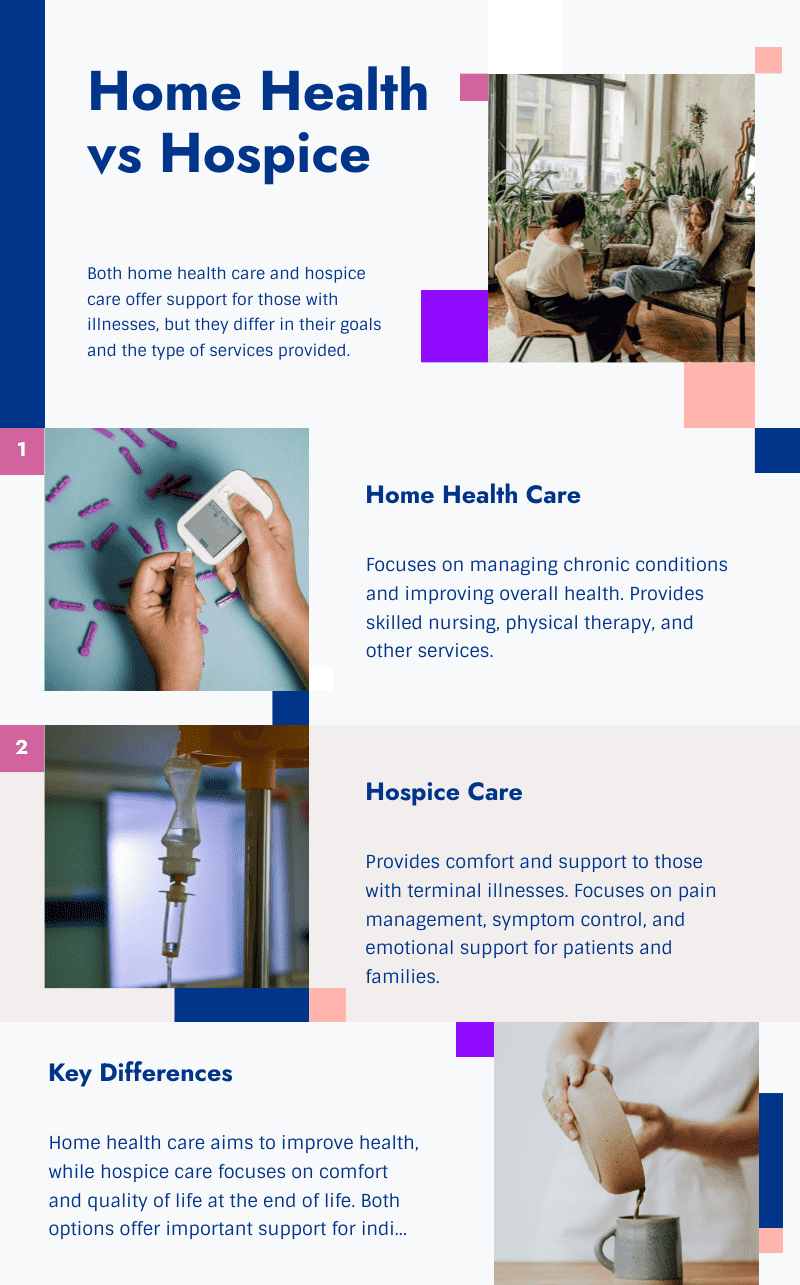

Hospice care is the type of care we provide to a loved one who has been diagnosed with a terminal illness.
They have a few months left to live (usually 6 months) and they need to get the best care and affection possible, to go through this tough time.
On the other hand, we provide Home Health Care to anyone who’s struggling with medical conditions that require continuous monitoring and attention at home.
These two services serve unique purposes, and it’s really important to know that actual differences to help you make the right choice for your family in a given situation.
Let’s look at the basics of home health care vs hospice care, including who qualifies, what each service offers, how they’re delivered, and which one might suit your loved one’s needs best.
Home Health Care vs Hospice: A Clear Overview
What is Home Health Care?
Home health care is really about helping a loved one recover or manage a medical condition while they remain in their home.
This type of care can include things like medication management, physical therapy, wound care, and general nursing support.
It’s often used when a person has been discharged from the hospital or needs regular medical help but doesn’t want to live in a facility.
What is Hospice Care?
Hospice care, on the other hand, focuses on comfort and quality of life for those nearing the end of life, usually when a person has been given a prognosis of six months or less to live.
Unlike home health care, hospice is not aimed at recovery.
Instead, the goal is to make sure the person feels as comfortable as possible, managing pain and other symptoms to improve their quality of life.
Dementia patients who are at the ending stages can also receive a special kind of hospice care for dementia.
- Key Difference: Home health care focuses on recovery and treatment, while hospice care emphasizes comfort at the end of life.

Eligibility Criteria: Hospice Vs Home Health Care
Who Qualifies for Home Health Care?
For someone to qualify for home health care, they typically need a doctor’s recommendation, especially if insurance like Medicare is covering the cost.
This might be after a hospital stay or for someone with a chronic condition requiring regular monitoring.
It’s generally for people who have ongoing medical needs and need help managing them at home.
People generally confuse Home Health Care (HHC) and simple Home Care. With home care, the responsibilities of the caregiver are hardly medical related.
Who Qualifies for Hospice Care?
Hospice care is for individuals with a terminal diagnosis, usually with a life expectancy of six months or less.
This is often determined by a healthcare team, including doctors and hospice staff.
Hospice isn’t just for cancer patients—it can also be for those with other serious illnesses, such as advanced heart disease, COPD, or dementia.
Primary Services Provided: Comparison
Home health care can involve various treatments, such as:
- Skilled nursing care for wounds, IV therapy, and medications.
- Physical therapy to help regain strength or improve mobility.
- Occupational therapy for adapting daily routines and tasks.
- Speech therapy if there are issues with swallowing or communication.
Hospice care provides comfort-focused services, which include:
- Pain management and symptom relief to keep the person comfortable.
- Counseling and emotional support to help patients and families’ cope.
- Spiritual care for those seeking spiritual peace or support.
- Volunteer services for companionship or light household help.

Family Support in Both Types of Care
Both home health care and hospice offer support for families, though in different ways.
In hospice, family support is often deeper, with counselors or spiritual guides available for family members.
Home health care focuses more on training family members to assist with medical tasks, like managing medication intake and medication reminders or using medical equipment.
Location and Coordination: Home Health Care vs Hospice
Who Provides Home Health Care?
Home health care is often delivered by a team that includes nurses, physical therapists, occupational therapists, and sometimes social workers.
These professionals usually visit a few times a week, depending on the patient’s needs and what their insurance covers.
Who Provides Hospice Care?

Hospice care involves a more specialized team that may include:
- Doctors specializing in palliative care (care focused on comfort).
- Nurses who are trained in end-of-life care.
- Chaplains or spiritual advisors for those seeking spiritual guidance.
- Social workers and counselors to support emotional and family needs.
Who Coordinates? Hospice Care vs Home Health Care
Hospice teams coordinate closely with other healthcare providers, ensuring that everyone understands the goal is comfort, not curing.
Home health care teams also coordinate, but they focus on treatment goals, often working directly with the patient’s primary care doctor or specialists to adjust care as needed.
Where is Home Health Care Delivered?
Home health care can be delivered in the patient’s own home, in assisted living facilities, or even in nursing homes.
You can get a 24-hour home health caregiver for extreme cases, but the costs could be significant.
The location flexibility helps people stay in familiar surroundings while receiving necessary medical care.
Where is Hospice Care Delivered?
Hospice care is also usually provided at home but can take place in a hospice facility, hospital, or nursing home.
The location depends on the person’s comfort and needs, as well as what the family is able to manage at home.
How Accessible Are These Services?
Home health care typically involves visits scheduled throughout the week, depending on the level of care needed.
Hospice care usually offers more regular visits, often daily, and there is often 24/7 on-call support in case urgent help is needed.
Need help finding a caregiver for your Loved One?

Find My Caregiver Today
Cost and Insurance Coverage Comparison
Home Health Care Costs and Coverage
Home health care is often covered by Medicare, Medicaid, or private insurance, especially when a doctor prescribes it.
Coverage includes things like nursing visits, physical therapy, and medical equipment. However, services are often limited to part-time or short-term care.
Hospice Care Costs and Coverage
Hospice care is also largely covered by Medicare, Medicaid, and many private insurance plans.
Hospice coverage is generally more comprehensive because it’s meant to cover all end-of-life needs, so families don’t have to worry about out-of-pocket expenses for most medical services provided.
We’ve provided a detailed guide on how to pay for home health care with social security.
Out-of-Pocket Costs: Home Care vs Hospice
For both home health care and hospice, there can be out-of-pocket costs, such as personal care assistance (like help with bathing or dressing) if it’s not covered by insurance.
For hospice, personal care (or live in care) is often included, but it’s always best to check specific coverage details with your provider.
Pros and Cons of Home Health Care Vs Hospice Care:
Both Hospice and Home H Care have their perks and of course, they apply to completely different areas.
Pros of Home Health Care
- Helps with recovery and managing chronic conditions.
- Allows for more independence by enabling people to stay at home.
- Provides targeted treatments to improve the person’s overall health.
Pros of Hospice Care
- Prioritizes comfort and quality of life at the end stage.
- Emotional, psychological, and spiritual support for both patient and family.
- Care is usually covered more fully by insurance, reducing financial stress.
Limitations of Home Health Care and Hospice Care
Home health care may not cover all the palliative needs that hospice can provide.
On the other hand, hospice focuses on comfort, so curative treatments are not an option once a person is on hospice care.
How to Choose Between Hospice Care vs Home Health Care
Assess Family and Patient Preferences
It’s important to take into account what the patient wants and what family members feel comfortable providing.
For instance, if your loved one still has a desire for treatment, home health care might be best. If they prefer comfort over treatment, hospice could be a better fit.
Evaluate the Patient’s Current and Future Needs
Consider if the person’s condition is likely to improve or if it’s progressive and irreversible.
Home health care might suit those with the chance of recovery, while hospice fits those nearing the end of life.
Support for Families in Both Types of Care
Both options provide family support, but hospice generally has more support resources for families, like grief counseling and spiritual services.
Home health care may focus more on training family members to assist in the caregiving process.
Questions to Ask When Deciding
- What are the primary goals: recovery or comfort?
- Is the loved one open to stopping treatments, or do they wish to continue trying?
- What support does the family need, both practically and emotionally?
Consulting Healthcare Providers for Guidance
Talking to doctors, nurses, or other healthcare providers can help you decide.
They can give insight into what would best meet the patient’s needs based on their health status.
Planning for a Smooth Transition if Needed
If your loved one starts with home health care and later requires hospice, planning for this shift can make the transition easier.
Communicate with both the home health and hospice providers to avoid any gaps in care.
Final Thoughts
Choosing between home health care and hospice care is deeply personal and depends on many factors, including health status, family support, and the wishes of the person needing care.
The key difference is that home health care aims to support recovery, while hospice focuses on comfort and dignity at the end of life.
By considering what’s most important to your loved one and talking with healthcare professionals, you can make a decision that honors their needs and wishes.

Dr. Ella Njike is the branch administrator for Global One Home Care, Boston, an agency that provides quality care for seniors and kids or adults with disabilities. With a Doctorate and extensive experience working in the healthcare industry, Dr Ella brings a unique understanding to the challenges families face. Through Global One Home Care Boston, he ensures that care extends beyond daily tasks, focuses on building genuine connections and respecting each family's journey.
Contact us
We aim to be an active partner in your care, not to take over. You are the CEO of your care, and we support you in managing it effectively.
Here are some features of our Global One Home Care
- 24/7 access to care
- Customized care plans
- Supervisory visits
- Caregiver introductions
- Nutritional planning
- Respite support
- Companionship
- Mobility assistance
- Durable Medical Equipment recommendations
- Errands and Shopping
- Fall Prevention
- ADLs