-
Talk to Our Care Planner

Caring for an aging loved one?
One of the best ways to keep them happy and strong is through exercise, even if they’re mostly in bed.
This guide explains the most effective bed exercises for elderly folks. These bed exercises are perfect for seniors who are bedbound or just want a low-impact way to stay active.
Why Exercise Matters?
Exercise is important for everyone, especially seniors. As we age, our bodies need a little more help staying strong and flexible.
Bed exercises are a great way to help elderly loved ones stay fit without needing to get out of bed. This can be particularly helpful if they’re recovering from surgery or dealing with mobility issues.
Benefits of Bed Exercises
Bed exercises have many benefits.
- They can improve mobility, making it easier for seniors to move around.
- They can also help build strength, which is important for daily activities.
- Exercise is good for mental health too – it can help reduce anxiety and improve mood.
- Exercise is great for improving sleep for seniors. Here are 10 other things you can do to enhance the sleep of your aging loved ones.
- Plus, regular exercise can help with overall well-being, making seniors feel better both physically and emotionally.
Family members and caregivers can also benefit from knowing how to assist with these exercises, ensuring their loved ones stay active and healthy.
Caring for your loved one all by yourself? Maybe it’s time to hire a compassionate caregiver to give you a hand? Here’s how to hire a great caregiver with all the qualities you seek.

What Are The Best Bed Exercises?
Bed exercises are workouts that can be done while lying or sitting in bed.
They’re designed to be gentle but effective, helping seniors maintain their strength and flexibility without needing to stand up.
There are many types of bed exercises, including leg exercises, trunk exercises, and arm exercises.
Each type targets different muscle groups and provides unique benefits.
Essential Bed Exercises for Elderly Loved Ones
1. Leg Exercises
Leg Lifts
Leg lifts involve raising one leg at a time while lying down.
This exercise strengthens the leg muscles and improves flexibility. It’s also great for circulation.
How to Do It:
- Lie on your back with your legs straight.
- Slowly lift one leg as high as you can, keeping it straight.
- Hold for a few seconds, then lower it back down.
- Repeat with the other leg.
- Do 10-15 repetitions per leg.

Expert Tip: Keep your movements slow and controlled. Focus on using your muscles rather than momentum.
Avoid lifting your leg too quickly or arching your back.
Knee Extensions
Knee extensions are simple movements that involve straightening the knee.
This exercise strengthens the knee joint and surrounding muscles.
How to Do It:
- Lie on your back with your knees bent.
- Slowly straighten one leg, lifting your foot off the bed.
- Hold for a few seconds, then lower it back down.
- Repeat with the other leg.
- Do 10-15 repetitions per leg.

Expert Tip: Make sure to fully extend your leg for the best results.
Don’t rush through the movements. Take your time to ensure proper form.
Ankle Pumps
Ankle pumps involve moving your feet up and down.
This exercise enhances circulation and prevents blood clots.
How to Do It:
- Lie on your back with your legs straight.
- Point your toes toward the ceiling, then down toward the bed.
- Repeat the movement for 1-2 minutes.

Expert Tip: Keep your movements steady and continuous.
Avoid jerky movements. Smooth, controlled motions are key.
Leg Circles
Leg circles involve moving your legs in circular motions.
This exercise promotes hip mobility and strength.
How to Do It:
- Lie on your back with your legs straight.
- Lift one leg slightly off the bed.
- Move your leg in small circular motions.
- Do 10 circles in one direction, then switch directions.
- Repeat with the other leg.
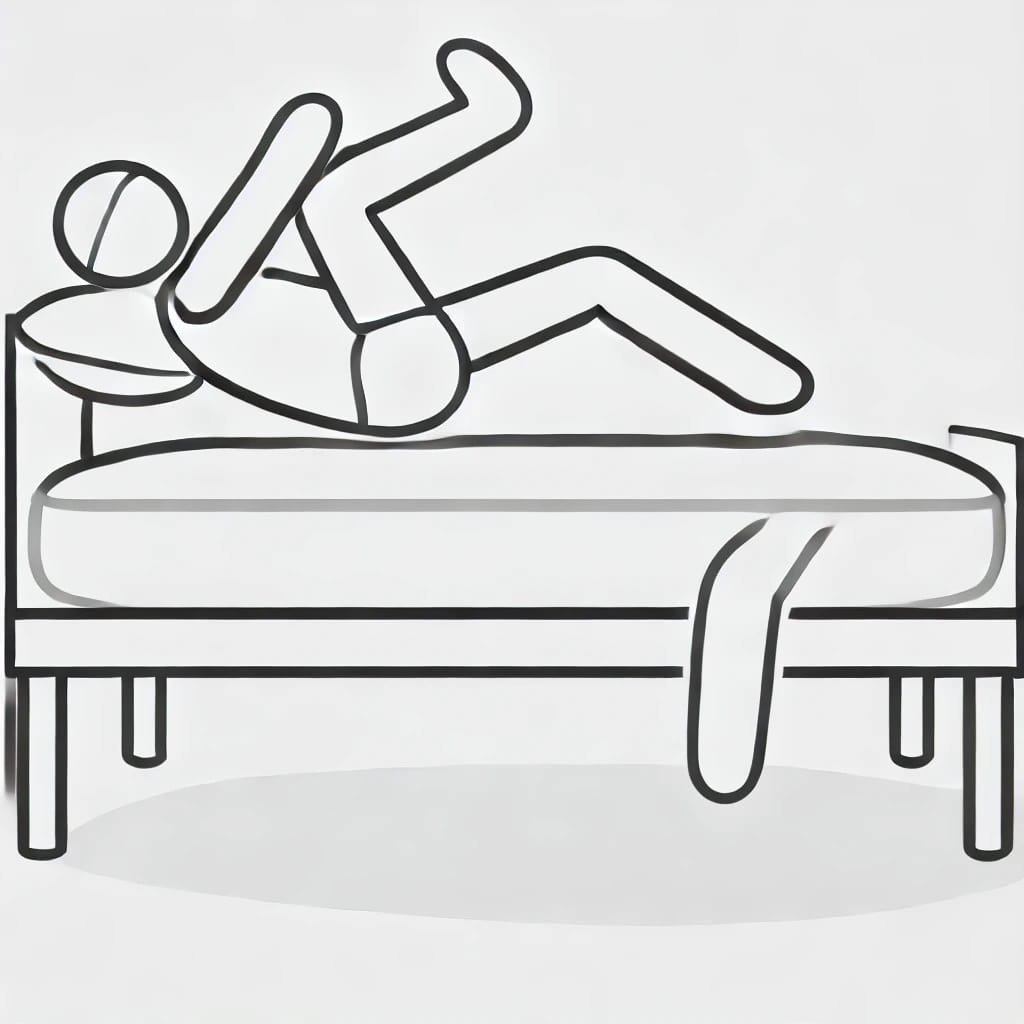
Expert Tips: Keep your circles small and controlled.
Avoid making large, uncontrolled circles.
Supine Angels
Supine angels involve moving your arms and legs together, similar to making snow angels.
This exercise combines leg and arm movements for a full-body workout.
How to Do Supine Angles:
- Lie on your back with your arms and legs straight.
- Slowly move your arms above your head while opening your legs out to the sides.
- Bring your arms and legs back to the starting position.
- Repeat for 10-15 repetitions.
Expert Tips: Keep your movements slow and controlled.
Avoid lifting your back off the bed. Keep your back flat against the bed.
2. Trunk Exercises
Trunk Rotations
Trunk rotations involve rotating your upper body while keeping your lower body still. This exercise enhances spinal mobility and core strength.
How to do trunk rotations:
- Lie on your back with your knees bent and feet flat on the bed.
- Slowly rotate your knees to one side, keeping your shoulders on the bed.
- Hold for a few seconds, then return to the starting position.
- Repeat on the other side.
- Do 10-15 repetitions per side.

Expert tips: Move slowly and control your breathing. Don’t force your knees to the bed. Only go as far as is comfortable.
Seated Torso Twists
Seated torso twists involve twisting your upper body while seated. This exercise improves flexibility and reduces stiffness.
How to do seated torso twists:
- Sit up in bed with your legs straight.
- Place your hands on your knees.
- Slowly twist your torso to one side, looking over your shoulder.
- Hold for a few seconds, then return to the starting position.
- Repeat on the other side.
- Do 10-15 repetitions per side.
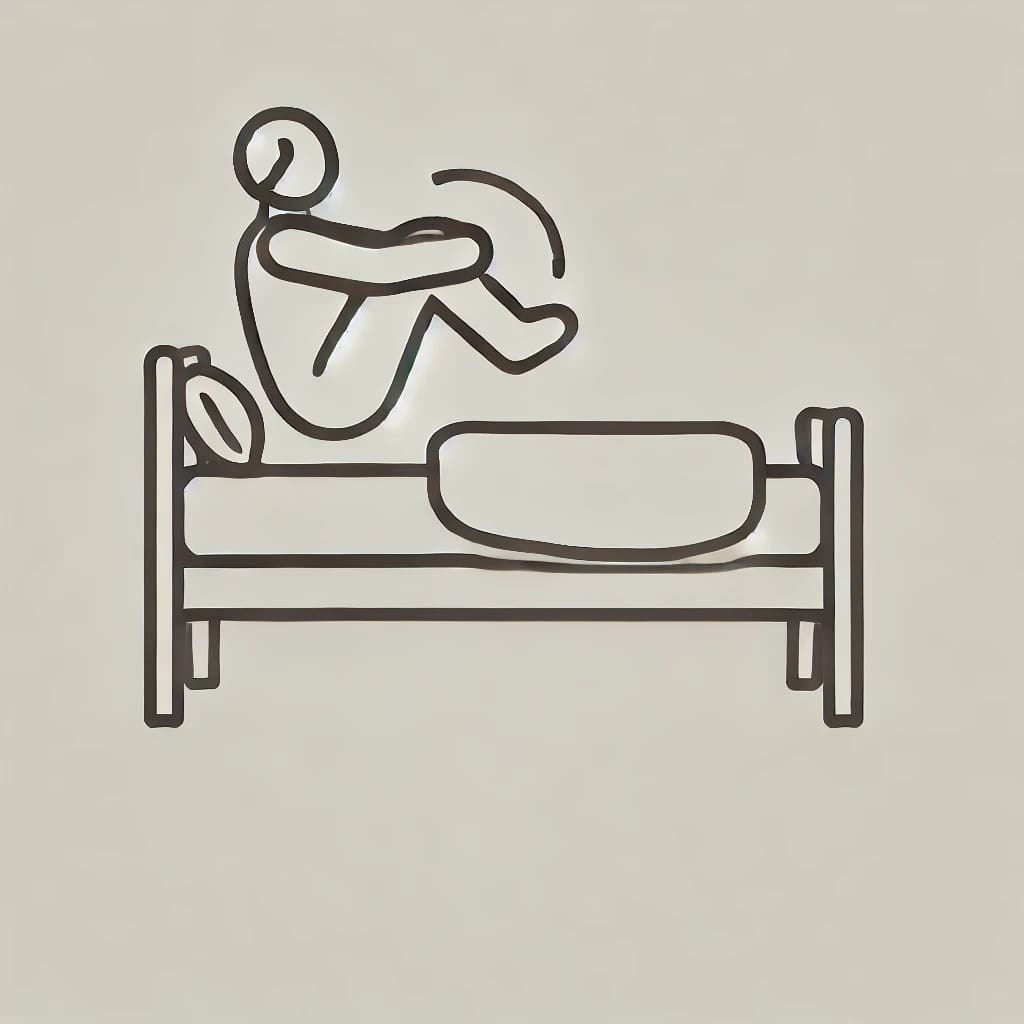
Expert tips: Keep your movements slow and controlled. Don’t twist too far or too quickly.
Pelvic Tilts
Pelvic tilts involve tilting your pelvis to engage your lower back muscles. This exercise strengthens lower back muscles and improves posture.
How to do pelvic tilts:
- Lie on your back with your knees bent and feet flat on the bed.
- Tighten your stomach muscles and tilt your pelvis upward.
- Hold for a few seconds, then relax.
- Repeat for 10-15 repetitions.
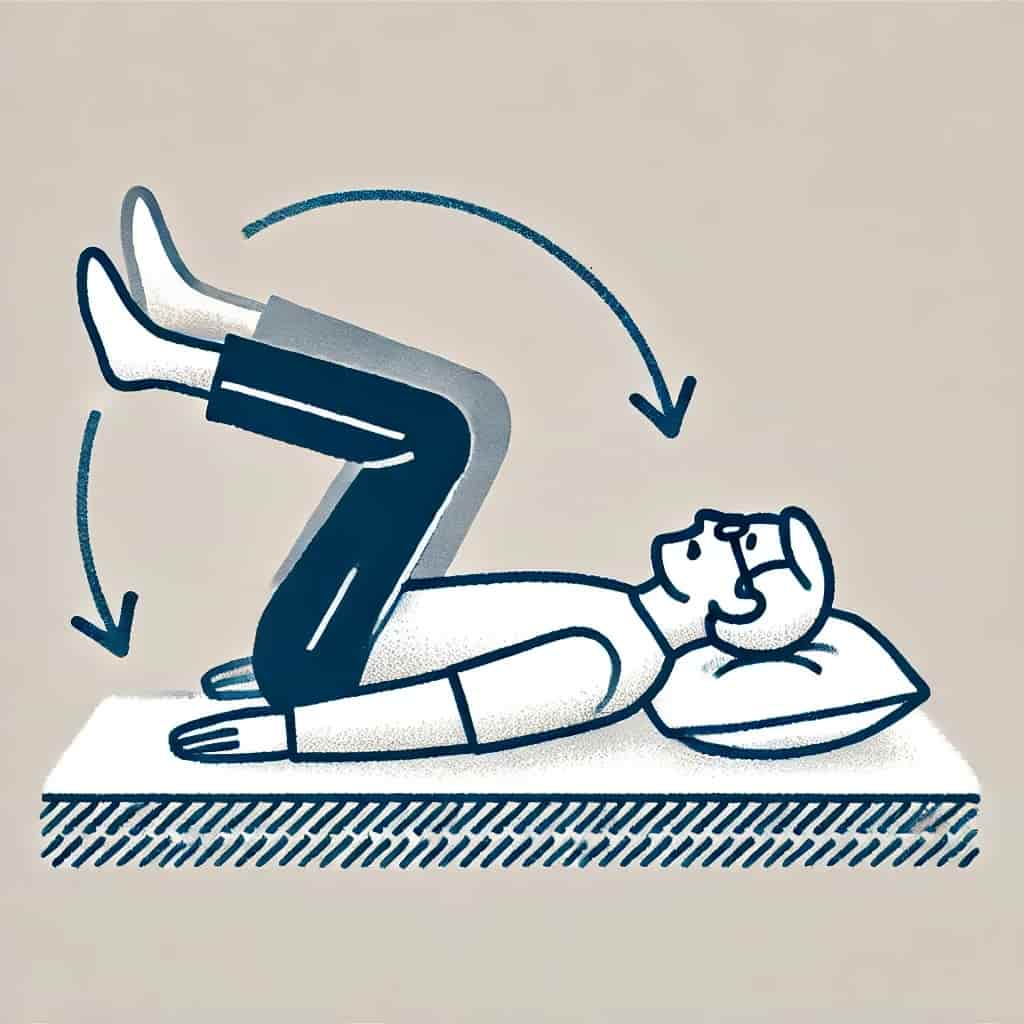
Tip: Focus on using your stomach muscles to tilt your pelvis. Avoid arching your back. Keep your movements controlled.
3. Arm and Upper Body Exercises
Arm Raises
Arm raises involve lifting your arms above your head. This exercise builds shoulder and upper arm strength.
How to do arm raises:
- Lie on your back with your arms at your sides.
- Slowly lift your arms above your head.
- Hold for a few seconds, then lower them back down.
- Repeat for 10-15 repetitions.

Tip: Keep your movements slow and controlled. Avoid arching your back. Keep your back flat against the bed.
Elbow Flexions
Elbow flexions involve bending your elbows to target the biceps and forearm muscles. This exercise strengthens the biceps and forearm muscles.
To do elbow flexions:
- Lie on your back with your arms at your sides and palms facing up.
- Slowly bend your elbows, bringing your hands toward your shoulders.
- Hold for a few seconds, then lower your hands back down.
- Repeat for 10-15 repetitions.
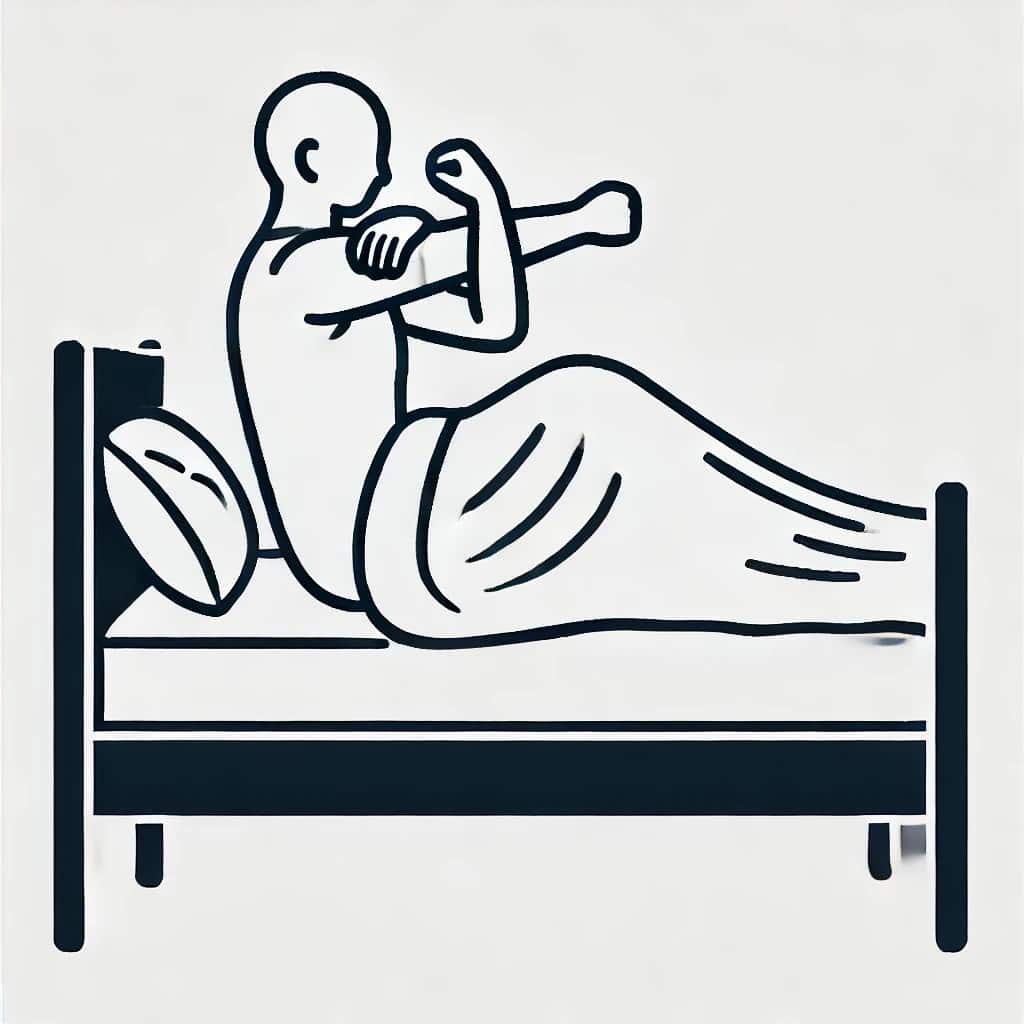
Tips: Keep your movements slow and controlled. Don’t use momentum to lift your arms. Focus on using your muscles.
Hand Squeezes
Hand squeezes involve squeezing a soft object, like a stress ball. This exercise enhances grip strength and dexterity.
How to do hand squeezes:
- Hold a soft object, like a stress ball, in one hand.
- Squeeze the object as hard as you can.
- Hold for a few seconds, then relax.
- Repeat for 10-15 repetitions.
- Switch to the other hand and repeat.

Tips: Focus on squeezing as hard as you can without causing pain. Don’t squeeze too quickly. Keep your movements slow and controlled.
Feeling trapped caring a loved one at home? Here’s how to regain your freedom.
Detailed Bed Exercise Programs
Supine Home Exercise Program
This program includes a series of exercises that can be done while lying on your back. It’s designed to improve strength, flexibility, and mobility.
Step-by-Step Guide:
- Start with ankle pumps to warm up.
- Move on to leg lifts and knee extensions.
- Follow with pelvic tilts and trunk rotations.
- Finish with arm raises and hand squeezes.
Leg Strengthening Exercises for Seniors
Strong legs are essential for mobility and independence. They help with everyday activities like walking and standing.
Here are some effective exercises to strengthen the legs:
- Leg lifts
- Knee extensions
- Ankle pumps
- Leg circles
- Supine angels
- Seated marches
- Heel slides
- Glute bridges
- Calf raises
- Side leg lifts
- Clamshells
- Hamstring curls
- Hip abductions
PDF and printable versions of exercises for bed bound elderly are available online. These guides provide detailed instructions and illustrations to help you get started.
It’s okay if all this seems overwhelming. It can be a great idea to hire a compassionate caregiver to care for your loved ones and buy you sometime to enjoy this life. We can help out…
Special Considerations for Bedbound Patients
Safety Tips
- Start Slowly: Begin with gentle exercises and gradually increase the intensity.
- Listen to Your Body: Stop if you feel pain or discomfort.
- Stay Hydrated: Drink plenty of water before and after exercising.
- Use Support: Use pillows or other supports to maintain proper posture.
Adaptive Exercise Equipment for Seniors
- Pillows: Use pillows to support your head, neck, and back.
- Resistance Bands: Incorporate resistance bands for added challenge.
- Soft Objects: Use soft objects, like stress balls, for hand exercises.
Always consult a healthcare provider before starting any new exercise program. They can provide personalized advice and ensure that the exercises are safe and appropriate for your loved one.
Effective Exercises for Bedridden Elderly Patients
Bed Mobility Exercises
- Rolling: Practice rolling from side to side to improve mobility.
- Scooting: Scoot up and down the bed to enhance movement.
- Bridging: Perform glute bridges to strengthen the lower body.
Supine Angels and Leg Circles
Supine angels combine leg and arm movements for a full-body workout. Leg circles promote hip mobility and strength with circular leg movements.
Printable Guides
Printable bed exercises for elderly guides are available online. These resources provide step-by-step instructions and illustrations to help you perform the exercises correctly.
How to Stay Consistent and Maintain Progress
Set Realistic Goals
- Start Small: Set achievable goals to build confidence and motivation.
- Track Progress: Keep a journal to monitor improvements and celebrate successes.
- Be Patient: Progress may be slow, but consistency is key.
Tracking Your Loved One’s Progress…

- Use a Journal: Record the exercises performed and any changes in strength or mobility.
- Set Milestones: Celebrate small milestones to stay motivated.
- Seek Feedback: Ask your loved one how they feel after exercising to make adjustments if needed.
Incorporating Exercises into Daily Routine
- Schedule Regular Sessions: Set a consistent time each day for exercise.
- Make It Fun: Use music or games to make exercising enjoyable.
- Get Involved: Participate in the exercises with your loved one for added support and motivation.
Expert Advice and Support
Look for online forums, support groups, and professional organizations that offer advice and support for caregivers and family members.
Final Thoughts
Bed exercises for the elderly can improve strength, flexibility, mobility, and mental health. They’re a great way to help your loved one stay active and healthy.
Don’t wait! Start incorporating bed exercises into your loved one’s daily routine today. Even small steps can make a big difference.
Here’s our ultimate list of 15 incredibly helpful tips for caring for elderly parent at home. You don’t want to miss that article.
Share your experiences and seek further information or support from healthcare providers and online resources.
FAQs
- How often should bed exercises be done? Aim for at least 3-5 times a week.
- Are bed exercises safe for all seniors? Always consult a healthcare provider before starting any new exercise program.
- What if my loved one feels pain? Stop the exercise immediately and consult a healthcare provider.

Dr. Ella Njike is the branch administrator for Global One Home Care, Boston, an agency that provides quality care for seniors and kids or adults with disabilities. With a Doctorate and extensive experience working in the healthcare industry, Dr Ella brings a unique understanding to the challenges families face. Through Global One Home Care Boston, he ensures that care extends beyond daily tasks, focuses on building genuine connections and respecting each family's journey.
Contact us Today for Your Free In Home Consultation
We aim to be an active partner in your care, not to take over. You are the CEO of your care, and we support you in managing it effectively.
Here are some features of our Global One Home Care
- 24/7 access to care
- Customized care plans
- Supervisory visits
- Caregiver introductions
- Nutritional planning
- Respite support
- Companionship
- Mobility assistance
- Durable Medical Equipment recommendations
- Errands and Shopping
- Fall Prevention
- ADLs